Why BTech ICT Is Becoming One of the Smartest Engineering Choices in the AI Era
The rapid growth of Artificial Intelligence (AI), automation, cloud computing, and digital transformation is changing the way industries operate. As technology continues to evolve, students are looking for engineering programmes that offer strong career opportunities and future relevance. BTech ICT is emerging as one of the smartest choices for students who want to build careers in the technology-driven world.
Unlike traditional engineering branches that focus on specific areas, Information and Communication Technology engineering combines computing, communication systems, software development, networking, and emerging technologies. It prepares students with the skills needed to solve real-world challenges across multiple industries.
The growing demand for professionals who can manage digital infrastructure, develop intelligent solutions, and work with advanced technologies has increased the popularity of ICT engineering. With industries adopting AI, IoT, cybersecurity, and data-driven solutions, the BTech ICT career scope is expanding rapidly.
For students searching for the best engineering courses after 12th, BTech ICT offers a balanced combination of technical knowledge, innovation, and career flexibility. It helps learners develop skills that align with current industry requirements while preparing them for future technology trends.
This blog explores why BTech ICT is becoming a preferred engineering choice in the AI era, its career opportunities, salary trends, and why it can be a valuable option for aspiring engineers.
What is BTech ICT?
BTech ICT stands for Bachelor of Technology in Information and Communication Technology. It is an undergraduate engineering programme designed to provide knowledge of computing technologies, communication networks, software systems, and digital solutions.
The programme combines concepts from computer science, information technology, electronics, and communication systems. Students learn how different technologies work together to create efficient digital solutions used by modern businesses and organisations.
Key areas covered in BTech ICT include:
- Programming and software development
- Database management
- Computer networks
- Cloud computing
- Artificial Intelligence and Machine Learning
- Cybersecurity
- Internet of Things (IoT)
- Data analytics
The increasing adoption of digital technologies has made ICT professionals essential across industries. The BTech ICT engineering future looks promising because businesses require skilled professionals who can manage complex technology ecosystems.
Students pursuing this programme gain technical expertise along with problem-solving abilities, making them suitable for diverse technology roles. The field of ICT continues to expand with innovations in automation, smart systems, and connected technologies, creating new opportunities for engineering graduates.
Significance of ICT in the AI Era
Artificial Intelligence is transforming industries by enabling automation, intelligent decision-making, and advanced digital solutions. Behind these AI-powered systems, ICT plays an important role by providing the infrastructure, networks, and computing systems required for their development and implementation.
The Future of ICT engineering in AI era is strongly connected with technologies such as machine learning, cloud platforms, cybersecurity, and big data. ICT engineers help organisations build, maintain, and improve technology solutions that support AI applications.
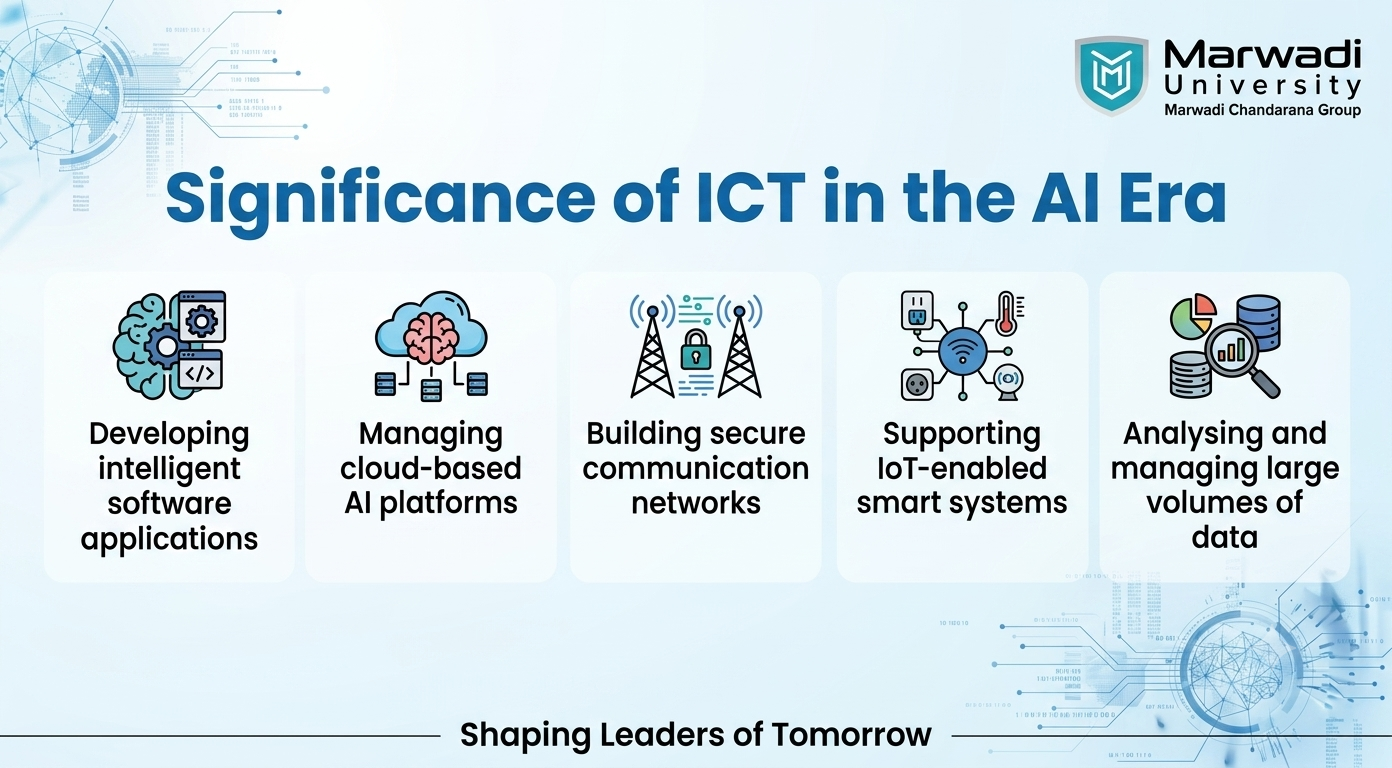
From developing intelligent software applications to managing cloud-based AI platforms, secure networks, IoT systems, and large-scale data, ICT enables industries to innovate and grow.
The demand for professionals with knowledge of both ICT and AI is increasing across sectors. Students interested in AI and ICT engineering careers can explore opportunities in software development, data science, cybersecurity, cloud computing, and technology consulting.
With continuous advancements in technology, ICT engineering is becoming a future-focused discipline that prepares students for careers in emerging digital environments.
Career Opportunities & Hiring Industries
The demand for technology professionals is growing as companies continue their digital transformation journeys. A degree in ICT opens doors to multiple career paths across different industries.
Some popular BTech ICT jobs in India include:
- Software Developer
- Cloud Engineer
- Network Engineer
- Data Analyst
- Cybersecurity Specialist
- AI and Machine Learning Engineer
- IoT Engineer
- System Architect
Industries hiring ICT graduates include:
- Information Technology
- Banking and Finance
- Healthcare Technology
- Telecommunications
- E-commerce
- Manufacturing
- Government Technology Services
The combination of programming, networking, and emerging technology skills gives ICT graduates an advantage in a competitive job market. Companies are increasingly searching for professionals who can understand both software systems and digital communication infrastructure.
Compared with traditional engineering fields, ICT provides broader career flexibility. Understanding the difference between BTech ICT vs CSE can help students choose the right path based on their interests. While CSE focuses more on computer science concepts, ICT includes computing along with communication technologies.
Salary Trends After BTech ICT
Salary opportunities after engineering depend on skills, experience, job role, and industry demand. As technology-driven roles continue to grow, ICT graduates can access competitive career opportunities.
The average BTech ICT salary in India varies based on factors such as technical expertise, certifications, internships, and practical experience. Fresh graduates can start their careers in software development, networking, data analytics, and cloud-related roles.
Average Salary Range After BTech ICT in India:
- Software Developer: ₹3.5 LPA – ₹8 LPA
- Full Stack Developer: ₹5 LPA – ₹10 LPA
- Cloud Engineer: ₹5 LPA – ₹12 LPA
- Data Analyst: ₹4 LPA – ₹8 LPA
- AI & Machine Learning Engineer: ₹6 LPA – ₹15 LPA
- Cybersecurity Analyst: ₹4 LPA – ₹10 LPA
- DevOps Engineer: ₹5 LPA – ₹12 LPA
- Network Engineer: ₹3 LPA – ₹7 LPA
Salary Growth with Experience:
- Entry-Level Professionals (0-2 years): ₹3 LPA – ₹8 LPA
- Mid-Level Professionals (3-6 years): ₹8 LPA – ₹18 LPA
- Experienced Professionals (7+ years): ₹15 LPA – ₹30+ LPA
Some factors influencing salary growth include:
- Programming skills
- Knowledge of AI and automation
- Industry certifications
- Project experience
- Problem-solving abilities
Professionals who continuously upgrade their skills in areas like artificial intelligence, cybersecurity, cloud computing, and data science often find better growth opportunities.
The increasing use of emerging technologies in ICT engineering is creating demand for skilled professionals who can develop innovative solutions. As industries become more technology-dependent, ICT graduates can expect strong career progression and opportunities for long-term growth.
Why Choose Marwadi University for BTech ICT?
Choosing the right university plays an important role in building a successful engineering career. Marwadi University focuses on providing industry-oriented education that helps students develop relevant technical skills.
The university is accredited with NAAC A+ grade, has NBA Tier-1 programs, holds a 353 QS Asia Rank, a Top 200-300 NIRF rank, and is awarded as a Centre of Excellence by the Govt. of Gujarat.
The BTech ICT programme at Marwadi University is designed to help students understand modern technologies and prepare for evolving industry requirements.
Key advantages include:
- Industry-relevant curriculum
- Experienced faculty support
- Practical learning through projects and labs
- Exposure to emerging technologies
- Skill development opportunities
- Career guidance and placement support
Students get opportunities to work on technology-based projects that improve their practical understanding. The university encourages innovation, research, and hands-on learning to help students become future-ready professionals.
With technology changing rapidly, engineering students need an education system that goes beyond textbooks. Marwadi University focuses on developing technical knowledge, creativity, and problem-solving skills required for successful careers in the digital era.
Is BTech ICT the Right Choice in the AI Era?
Technology is becoming a central part of every industry, and the demand for skilled professionals continues to increase. BTech ICT provides students with the right combination of computing, communication, and emerging technology skills needed for the future.
From artificial intelligence and cloud computing to cybersecurity and IoT, ICT professionals play an important role in building modern digital solutions. The expanding BTech ICT career scope makes it an attractive option for students who want diverse career opportunities.
For students comparing different engineering options, understanding the role of ICT in the technology ecosystem can help them make an informed decision. The field offers opportunities across industries and allows graduates to continuously grow with changing technologies.
As AI continues to reshape the professional world, engineers with strong ICT knowledge will remain valuable. Choosing BTech ICT can help students build a career that aligns with future technology trends while developing skills that industries need.
For students looking for a future-focused engineering programme, BTech ICT is not just a degree; it is a pathway towards innovation, growth, and exciting technology careers.
FAQs
1. What is BTech ICT?
BTech ICT is an engineering programme that combines computing, communication technologies, networking, and digital systems.
2. Is BTech ICT a good career option in the AI era?
Yes, BTech ICT offers strong career opportunities due to growing demand for AI, cloud computing, cybersecurity, and digital technologies.
3. What are the career options after BTech ICT?
Graduates can work as software developers, AI engineers, cloud engineers, cybersecurity specialists, and data analysts.
4. What is the difference between BTech ICT and CSE?
BTech CSE mainly focuses on computer science, while BTech ICT combines computing with communication and networking technologies.
5. What is the salary after BTech ICT in India?
BTech ICT salary in India depends on skills, experience, and job role, with strong growth potential in technology-driven careers.