Why Choose BTech Civil Engineering in 2026? A Complete Guide for Freshers
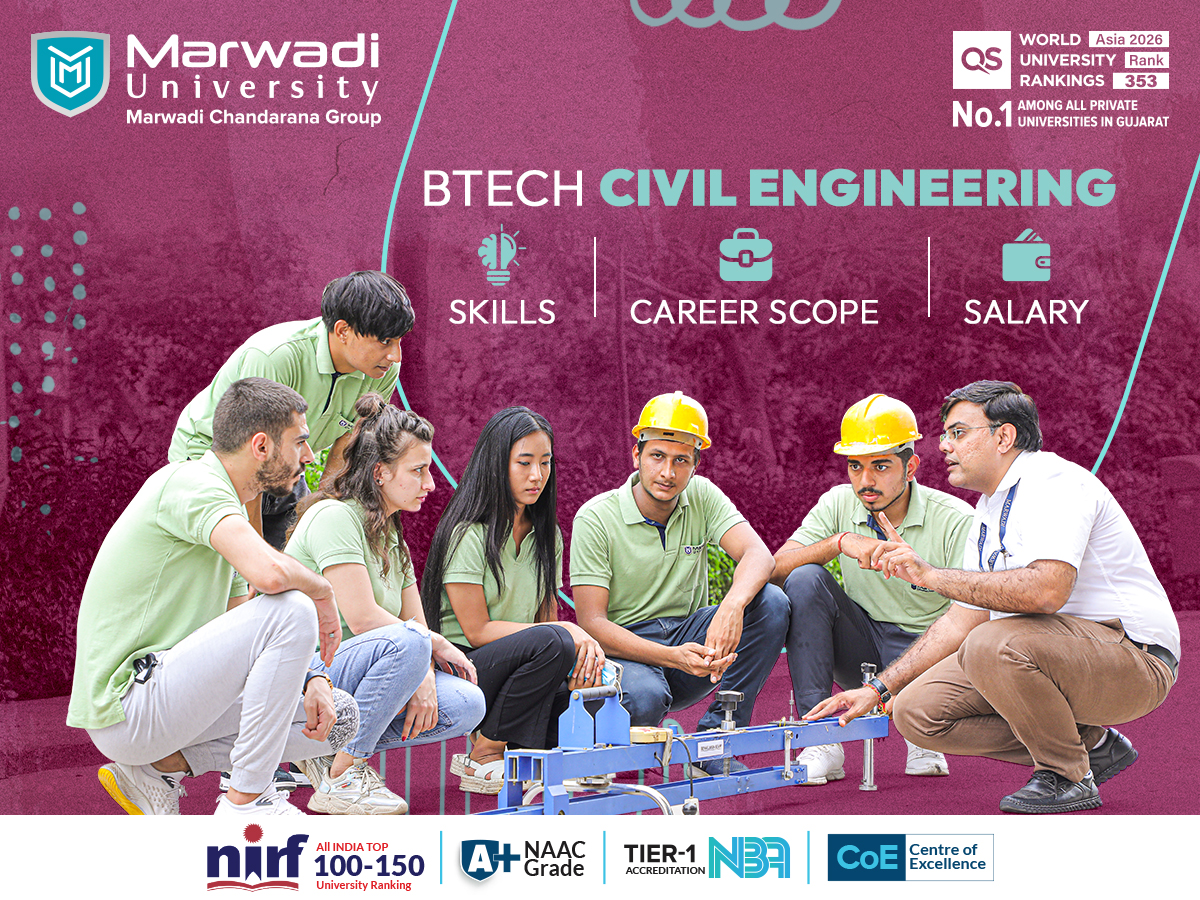
Choosing the right engineering degree after Class 12 can shape your career for years. If you enjoy designing, building, problem-solving, and working on projects that impact everyday life, BTech Civil Engineering can be a strong choice.
In 2026, the field goes far beyond traditional construction. Civil engineers contribute to roads, bridges, buildings, transportation systems, water management, environmental projects and smart infrastructure.
A BTech Civil Engineering degree combines engineering theory with practical learning. Students study how structures behave, how materials perform, how land is surveyed and how infrastructure is planned, built and maintained. The programme also develops skills that are useful across construction, infrastructure, consulting, transportation, environmental services and public-sector projects.
For freshers, understanding the course before applying is important. You need to know the subjects, syllabus, eligibility, career opportunities and expected salary range. You should also consider whether the university provides practical exposure, modern facilities and industry-oriented learning.
This guide explains what you can expect from BTech Civil Engineering in 2026, what you will learn, where the degree can take you, and why consider Marwadi University for students looking to build a future in civil engineering. It can also open pathways into both private-sector and public-sector careers.
What is BTech Civil Engineering?
BTech Civil Engineering is a four-year undergraduate engineering programme that teaches students how to plan, design, construct and maintain the built environment. It covers the science and technology behind structures and infrastructure, while developing the practical and analytical abilities needed to solve real engineering problems.
The BTech Civil Engineering course typically combines classroom learning, laboratory work, technical drawing, fieldwork, projects and practical applications. At Marwadi University, the introductory civil engineering curriculum includes surveying, maps and plans, construction materials, water resources, building planning and transportation, giving students an early understanding of how civil engineering connects with everyday infrastructure.
Key areas covered through the programme include:
- Structural engineering and analysis
- Geotechnical engineering and soil mechanics
- Construction materials and concrete technology
- Surveying, transportation and highway engineering
- Environmental and water resources engineering
- Building planning and construction management
- Modern construction technologies and digital tools
The BTech Civil Engineering syllabus can vary by university, but the goal remains consistent: build strong engineering fundamentals and prepare students to apply them to real projects. Marwadi University’s published curriculum also includes topics such as construction automation, drones, robotics, BIM, VR and AR, reflecting the growing role of technology in the sector. It suits students who enjoy design and science.
What Skills Will You Learn in BTech Civil Engineering?
A BTech Civil Engineering programme develops both technical knowledge and workplace abilities. Students learn to understand engineering drawings, analyse materials and structures, interpret survey data and approach construction problems systematically.
Important skills include:
- Structural and analytical thinking
- Surveying and technical drawing
- Construction planning and estimation
- Problem-solving and decision-making
- Knowledge of materials and testing
- Project and site management
- Communication and teamwork
- Digital and emerging construction technologies
Practical learning is especially important because civil engineering involves applying concepts safely and accurately in real environments. These abilities help graduates work effectively with engineers, architects, contractors and project teams on real projects with confidence.
What is the Career Scope after BTech Civil Engineering?
The BTech Civil Engineering scope is broad because infrastructure is essential to economic growth, urban development and everyday life. Fresh graduates can enter construction, infrastructure development, transportation, consulting, real estate, environmental services, government projects and specialised engineering firms.
Common BTech Civil Engineering career options include:
- Civil Engineer
- Site Engineer
- Structural Engineer
- Construction Engineer
- Project Engineer
- Quantity Surveyor
- Planning Engineer
- Transportation Engineer
- Geotechnical Engineer
- Environmental Engineer
Hiring industries include:
- construction and infrastructure companies
- engineering consultancies
- real estate developers
- transportation organisations
- government departments
- environmental firms
- project-management companies
Graduates can also prepare for competitive examinations and public-sector opportunities or pursue M.Tech, MBA and other specialised higher-education pathways.
The nature of BTech Civil Engineering jobs is also changing. Technology is becoming part of surveying, design, project monitoring and construction. At Marwadi University, the published curriculum includes automation in construction, drones and robotics, BIM, VR and AR, showing how students can encounter newer technologies alongside core civil engineering concepts.
For freshers, the best approach is to build strong fundamentals first and then add practical experience, software skills, internships and project work. This combination can improve employability and help graduates choose a specialisation that matches their interests. Internships and projects can help students understand workplace expectations.
What are the Salary Trends for BTech Civil Engineering?
BTech Civil Engineering salary in India varies according to experience, job role, location, employer, technical skills, and specialisation.
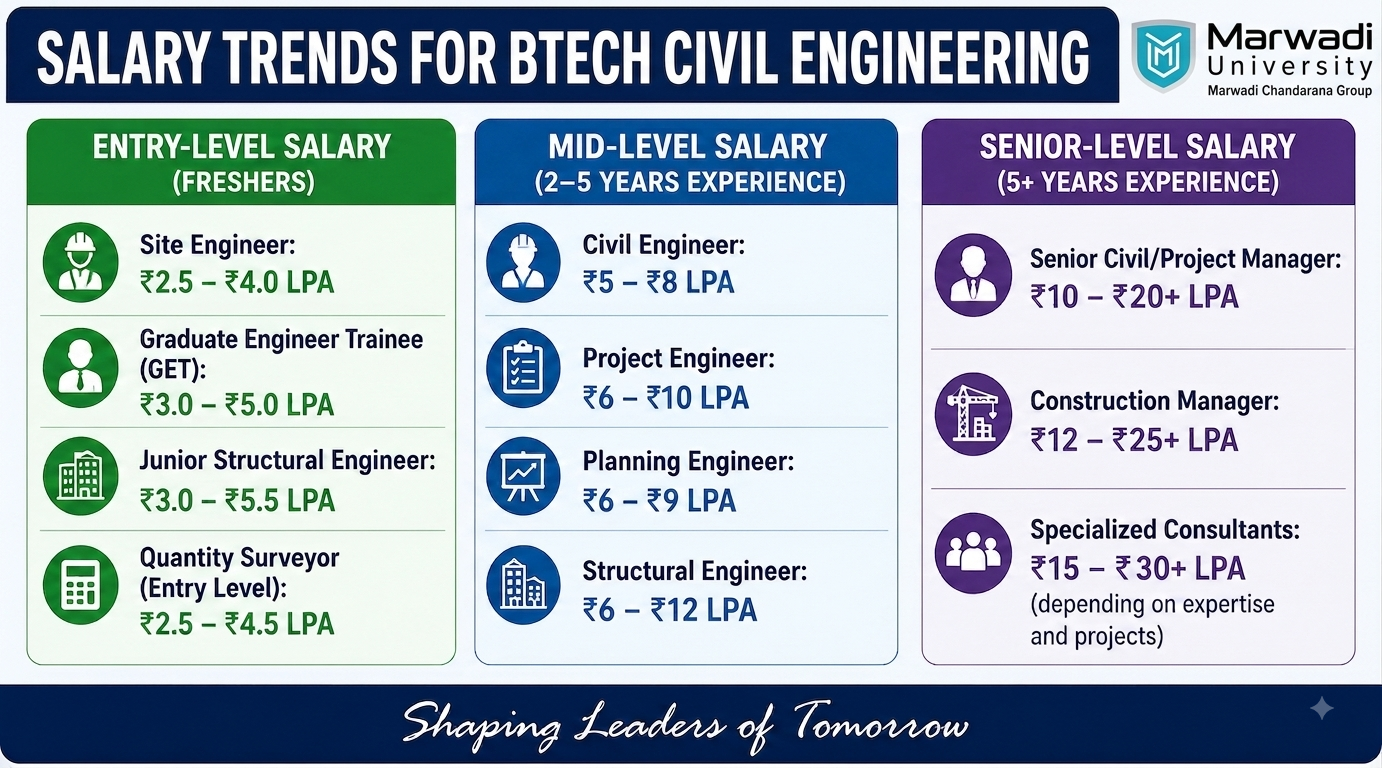
Salary can also differ between site engineering, structural design, project management, quantity surveying, consulting and government careers. Skills in areas such as BIM, project planning, surveying, construction technology and data-driven tools can significantly improve earning potential.
Students should compare curriculum, practical exposure, internships, industry interaction and placement support rather than focusing only on salary.
Why Choose Marwadi University for BTech Civil Engineering?
Choosing the right university can make a major difference to your engineering learning experience. Marwadi University offers a four-year Civil Engineering programme within its Faculty of Engineering and Technology, with an emphasis on dynamic, interdisciplinary and hands-on education.
Marwadi University is accredited with NAAC A+ grade, has NBA Tier-1 programs, a 353 QS Asia rank, a Top 200-300 NIRF rank, and is awarded as a Centre of Excellence by the Government of Gujarat.
Students considering Marwadi University can look at these advantages:
- Practical and hands-on learning: The university highlights learning through classrooms, research labs, and design-oriented environments.
- Industry relevance: The Faculty of Engineering states that its industry alliances help maintain relevance in classrooms and research labs.
- Modern civil engineering exposure: Published Civil Engineering coursework includes automation, drones, robotics, BIM, VR and AR alongside core engineering areas.
- Technical foundation: The curriculum covers areas such as surveying, building planning, transportation, construction materials and concrete technology.
- Student development: Marwadi University describes a three-layer learning approach designed to develop technical and soft skills, including critical thinking, collaboration and decision-making.
For students planning BTech Civil Engineering admission 2026, the university also provides a broader engineering ecosystem with clubs, research opportunities and industry-oriented activities.
The right choice ultimately depends on your academic goals, preferred learning environment, budget and career plans. Its campus environment also supports collaboration, student activities and opportunities to connect classroom learning with broader engineering challenges for students.
Final Thoughts
BTech Civil Engineering remains a relevant choice for students who want to build a career around infrastructure, construction, design and engineering problem-solving. The degree offers a strong combination of technical fundamentals, practical learning and opportunities to specialise as your interests develop.
Before selecting a programme, look beyond the degree name. Compare the curriculum, laboratory facilities, practical exposure, project opportunities, faculty expertise, industry interaction and placement support. Also check the university’s eligibility and admission requirements before applying.
For freshers, the biggest advantage of Civil Engineering is its variety. You can explore structures, transportation, construction, geotechnical engineering, environmental engineering, water resources or project management.
As technology becomes increasingly connected with infrastructure, learning tools such as BIM, automation, drones, robotics and digital project systems can add another dimension to your engineering profile.
Marwadi University combines core Civil Engineering learning with exposure to emerging construction technologies and a wider engineering ecosystem. Its published curriculum spans surveying, construction materials, transportation, automation, drones, robotics and BIM.
If you enjoy creating practical solutions and want a career connected to the infrastructure around us, BTech Civil Engineering can be a meaningful starting point. Research your options, compare programmes carefully, and choose a university that matches your goals confidently.
FAQs
1. What is BTech Civil Engineering?
BTech Civil Engineering is a four-year undergraduate programme focused on designing, constructing and maintaining buildings, infrastructure and other civil systems.
2. What are the eligibility criteria for BTech Civil Engineering?
BTech Civil Engineering eligibility generally requires Class 12 with Physics, Chemistry and Mathematics, subject to the university and applicable admission rules.
3. What are the main BTech Civil Engineering subjects?
Major BTech Civil Engineering subjects include structural engineering, surveying, geotechnical engineering, transportation, construction materials, environmental engineering and water resources.
4. What are the career options after BTech Civil Engineering?
Popular BTech Civil Engineering career options include civil engineer, site engineer, structural engineer, project engineer, planning engineer, quantity surveyor and transportation engineer.
5. What is the future scope of BTech Civil Engineering?
The BTech Civil Engineering future scope includes opportunities in infrastructure, smart cities, sustainable construction, transportation, environmental engineering, project management, and technology-enabled construction.