Why Skill-Based Education in India is Becoming the First Choice for Smart Students
The way students look at education is changing rapidly. Today, getting a degree alone is no longer enough to build a successful career. Students now want practical knowledge, real-world exposure, and skills that help them become job-ready from the very beginning. This is why skill-based education in India is becoming one of the biggest trends in higher education.
Modern students are focusing more on learning experiences that combine academics with practical applications. They are choosing universities that offer internships, live projects, industry certifications, startup opportunities, and hands-on learning. Instead of only memorizing theories, students now prefer gaining real skills that help them perform confidently in the workplace.
This shift is also changing how universities design their programs. Institutions are moving towards industry-focused education and creating an industry-aligned curriculum that matches current market demands. From communication and leadership to technical and digital skills, universities are helping students develop the right abilities for future careers.
In today’s competitive world, students understand the importance of career-focused learning and building strong employability skills for students. As industries continue to evolve with technology and AI, future-ready education is becoming more important than ever before.
Why Students Are Moving Beyond Traditional Degrees
For many years, students believed that earning a degree was enough to secure a good job. However, the professional world has changed significantly. Employers today are looking for candidates who can solve problems, work in teams, communicate effectively, and adapt quickly to changing technologies.
This is where the discussion around skills vs degrees becomes important. While degrees still matter, companies now value practical expertise and real-world experience equally. Students who have participated in internships, workshops, industry projects, hackathons, and certification programs often stand out during placements.
As a result, students are actively searching for universities that provide practical learning in universities rather than only classroom-based education. They want exposure to industry environments before graduation so they can confidently enter the workforce.
Another reason behind this shift is the rise of AI and automation. Many traditional jobs are changing rapidly, and students realize they must continuously upgrade their skills to remain relevant. This has increased the demand for job-ready skills for students such as data analysis, communication, digital literacy, critical thinking, leadership, and problem-solving.
Modern learners are also becoming more career-conscious. They are choosing programs that offer clear career pathways and industry relevance. Universities that focus on experiential learning, innovation, and practical exposure are becoming the preferred choice for students across India.
This new mindset is driving the popularity of modern university education, where learning goes beyond textbooks and focuses on overall personality development, industry exposure, and long-term career growth.
The Rise of Industry-Focused Education in India
India’s education system is gradually evolving to meet the demands of modern industries. Companies today require professionals who are not only academically strong but also capable of handling real workplace challenges. This has led to the rapid growth of industry-focused education across universities.
Students now expect universities to bridge the gap between classroom learning and industry expectations. They want access to live projects, mentorship programs, internships, workshops, and training sessions that prepare them for actual careers.
Universities are also redesigning their courses with an industry-aligned curriculum that includes emerging technologies, business trends, digital tools, and practical applications. Fields like artificial intelligence, cybersecurity, digital marketing, business analytics, UI/UX, and entrepreneurship are becoming increasingly popular among students.
Another major advantage of skill-based learning is that it improves confidence and adaptability. Students who gain hands-on experience during their academic journey often perform better during placements and interviews. They understand workplace culture, teamwork, communication, and professional responsibilities much earlier than others.
The focus on career-focused learning is also helping students identify their strengths and interests more effectively. Instead of limiting themselves to theoretical concepts, students now participate in competitions, innovation labs, startup ecosystems, and collaborative projects.
This transformation is creating a new generation of graduates who are better prepared for future opportunities. Universities that encourage innovation, creativity, leadership, and practical exposure are helping students become industry-ready professionals.
As industries continue to evolve, future-ready education will play a critical role in shaping successful careers for students in India.
3-Layer Education System
One of the reasons students are increasingly choosing institutions like Marwadi University is its strong focus on skill-based education in India and practical career development.
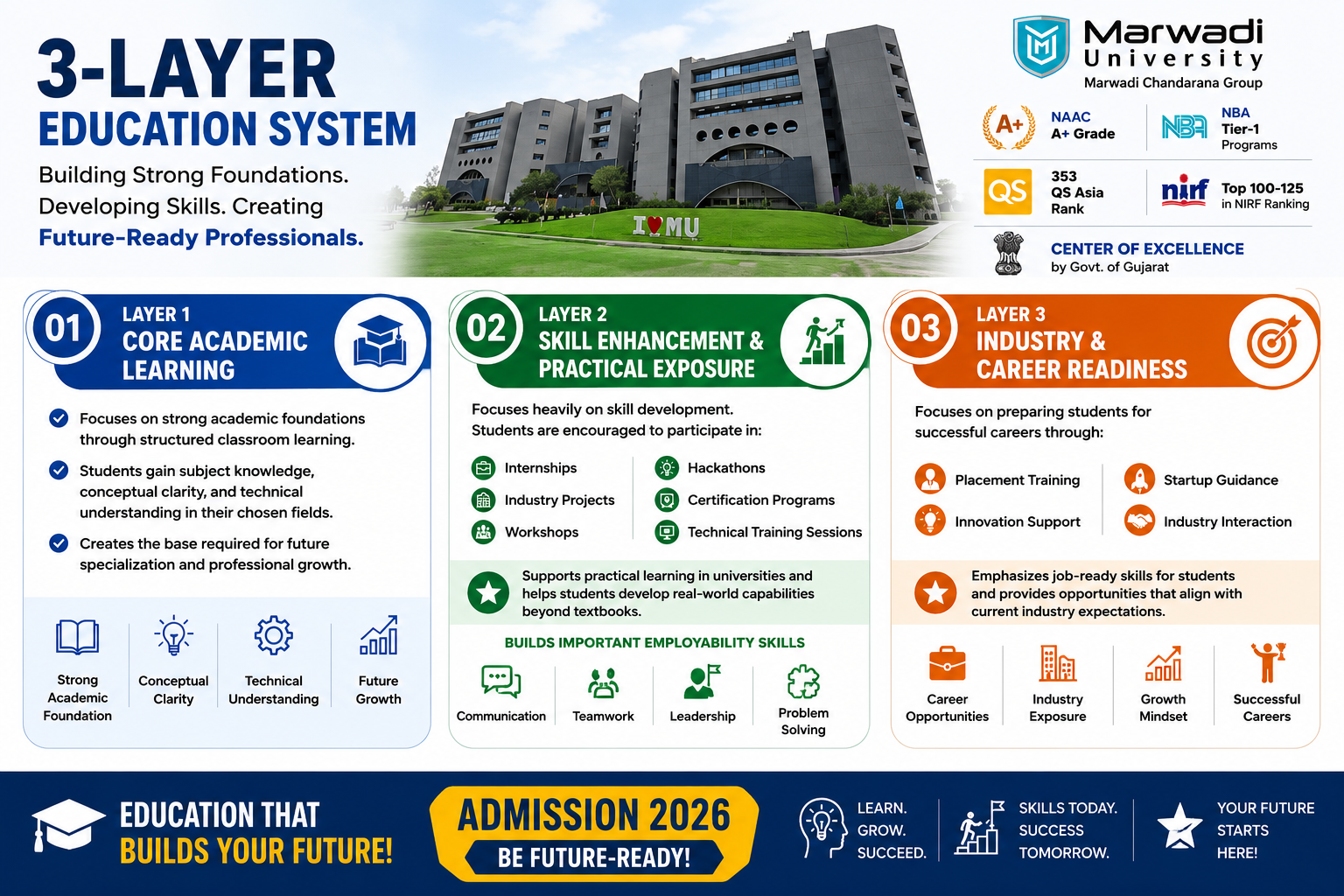
Marwadi University is accredited with NAAC A+ grade and NBA Tier-1 programs. The university holds 353 QS Asia rank and Top 100-125 in NIRF ranking. It is also awarded as Center of Excellence by Govt. of Gujarat.
The university has introduced an innovative 3-Layer Educational System designed to help students become academically strong, professionally skilled, and industry-ready.
Layer 1: Core Academic Learning
The first layer focuses on strong academic foundations through structured classroom learning. Students gain subject knowledge, conceptual clarity, and technical understanding in their chosen fields. This creates the base required for future specialization and professional growth.
Layer 2: Skill Enhancement and Practical Exposure
The second layer focuses heavily on skill development. Students are encouraged to participate in:
- Internships
- Industry projects
- Workshops
- Hackathons
- Certification programs
- Technical training sessions
This approach supports practical learning in universities and helps students develop real-world capabilities beyond textbooks. It also builds important employability skills for students such as communication, teamwork, leadership, and problem-solving.
Layer 3: Industry and Career Readiness
The third layer focuses on preparing students for successful careers through placement training, innovation support, startup guidance, and industry interaction. The university emphasizes job-ready skills for students and provides opportunities that align with current industry expectations.
This integrated model reflects the growing demand for modern university education, where students receive both academic knowledge and professional exposure together.
Additionally, many students and parents also research topics like Marwadi University fees while exploring universities that provide value-driven education with strong career support. The university’s emphasis on holistic development, practical exposure, and industry collaboration makes it an attractive option for students looking for future-ready education.
Why Skill-Based Education Matters for Future Careers
The future job market will continue to reward adaptability, creativity, and practical expertise. Employers are increasingly hiring candidates who can apply knowledge effectively instead of only scoring high marks in examinations.
This is why skill-based education in India is becoming essential for long-term career success. Students who develop technical, interpersonal, and analytical skills during university are more likely to perform well in professional environments.
Skill-based learning also encourages confidence and independent thinking. Students learn how to communicate ideas, manage projects, work in teams, and solve real-world problems. These abilities are valuable across every industry and profession.
Another major advantage is flexibility. As industries continue to evolve due to AI and digital transformation, students with practical skills can adapt more easily to changing job roles and technologies.
Universities that promote innovation, experiential learning, and industry interaction are helping students prepare for a highly competitive global workforce. Through internships, live projects, certifications, and collaborative learning, students gain exposure that makes them more employable after graduation.
In today’s world, education is no longer only about earning a degree. It is about becoming capable, confident, and career-ready. This is why more students are choosing institutions that prioritize skills, practical learning, and industry relevance.
Final Thoughts
The education landscape is changing rapidly, and students are becoming more aware of what truly matters for career success. Today, learners are looking beyond traditional classroom education and focusing on practical exposure, industry experience, and real-world skill development. This growing demand for skill-based education in India reflects a major shift in student priorities.
Universities that provide industry-focused education, hands-on learning opportunities, and an industry-aligned curriculum are helping students become more confident and career-ready. Modern learners want more than academic knowledge. They want practical skills, innovation exposure, and opportunities that prepare them for future challenges.
This is why concepts like career-focused learning, internships, live projects, and skill development programs are becoming essential parts of higher education. Students now understand that strong employability skills for students can create better career opportunities and long-term professional growth.
Institutions like Marwadi University are adapting to these evolving needs through innovative approaches like the 3-Layer Educational System, which combines academics, practical exposure, and career readiness.
As industries continue to transform with technology and AI, skill-based education in India will continue shaping the future of higher education. Students who focus on building practical skills alongside academic knowledge will be better prepared to succeed in tomorrow’s competitive world.
FAQs
1. What is skill-based education in India?
Skill-based education focuses on practical learning, industry exposure, and real-world skills that help students become career-ready.
2. Why are students choosing skill-based education?
Students prefer skill-based learning because it improves employability, practical knowledge, confidence, and job readiness.
3. How does practical learning help students?
Practical learning helps students gain hands-on experience through internships, projects, workshops, and industry interaction.
4. What are job-ready skills for students?
Job-ready skills include communication, teamwork, leadership, problem-solving, digital literacy, and technical expertise.
5. How does Marwadi University support skill-based education?
Marwadi University supports skill development through its 3-Layer Educational System that combines academics, practical exposure, and career readiness.