University Placements in India: What Every Student Should Know Before Admission
Choosing a university is a big decision. Students often compare courses, fees, campus facilities, and location. But one factor that matters just as much is university placements in India. Before taking admission, students should understand how placements actually work and what role a university plays in helping students build successful careers.
Many students believe placements are automatic. Just study for four years and get a job offer. The reality is different. A good placement outcome depends on student performance, industry demand, skills, internships, preparation, and the support system offered by the university.
Understanding how university placements work can help students make smarter admission decisions. It also helps them ask the right questions instead of focusing only on placement percentages or marketing claims.
Whether you are planning to study engineering, management, commerce, or computer applications, knowing the placement process in universities is important. This guide explains campus placements in India, how recruitment happens, what placement numbers actually mean, and what students should know about placements before choosing a university.
We will also look at how Marwadi University prepares students for placements through training, industry exposure, internships, and career development initiatives. Marwadi University is accredited with NAAC A+ grade, NBA Tier-1 programs, 353 QS Asia rank, Top 100-125 NIRF rank and has been awarded the title ‘Centre of Excellence’ by Govt. of Gujarat.
How University Placements Work
To understand college placements explained in simple terms, think of placements as a bridge between students and employers.
In most universities, a dedicated placement or corporate relations department works to connect companies with students. Companies visit campuses to recruit candidates for internships, full-time jobs, trainee roles, or graduate programs.
The basic placement process in universities usually follows these stages:
1. Student Registration
Students register for placement drives and create resumes highlighting their education, projects, certifications, internships, and skills.
2. Training & Preparation
Universities provide training in aptitude, communication, technical skills, interview readiness, and resume building. This phase is an important part of placement preparation for students.
3. Company Recruitment Drive
Recruiters visit campuses or conduct online hiring rounds.
4. Selection Process
The campus recruitment process may include:
- Aptitude tests
- Coding tests or technical assessments
- Group discussions
- Technical interviews
- HR interviews
5. Final Job Offer
Selected students receive job offers based on company requirements and their performance.
This is generally how placements work in engineering colleges, management institutions, and multidisciplinary universities across India.
Understanding the Campus Recruitment Process
The campus recruitment process can vary depending on the university, course, and company.
Some companies hire for technical roles, while others recruit for business, marketing, analytics, finance, HR, sales, or operations roles. Different industries also have different expectations.
In campus placements in India, companies often look for students who demonstrate:
- Strong subject knowledge
- Communication skills
- Problem-solving ability
- Teamwork
- Practical exposure
- Internship experience
- Adaptability and learning mindset
Students should understand that recruiters do not only look at academic scores. Skills, projects, certifications, and practical learning matter significantly.
For example, in engineering programs, recruiters may assess:
- Programming or coding ability
- Technical problem solving
- Project work
- Software tools knowledge
- Innovation mindset
This explains how placements work in engineering colleges today. Employers increasingly prefer students who can apply knowledge practically rather than rely only on theory.
Universities that provide industry exposure, workshops, hands-on labs, internships, and career readiness training often create stronger placement opportunities in universities.
Factors Affecting University Placements
Students often ask why placement outcomes differ between institutions. The answer lies in the many factors affecting university placements.
Here are some important ones students should understand before admission.
1. Industry Demand
Hiring trends change every year. Sectors like AI, data science, software, fintech, cybersecurity, analytics, and digital business may see strong demand during certain periods.
2. Student Skills & Preparation
Placement success depends heavily on student readiness. Communication, aptitude, technical competence, interview confidence, and practical knowledge influence outcomes.
This is why placement preparation for students starts much before final year.
3. Course & Specialization
Different courses may attract different recruiters. Engineering, management, commerce, design, healthcare, and IT programs often have distinct hiring patterns.
4. Internships & Practical Exposure
Internships help students gain real-world understanding and strengthen resumes. Employers often value candidates with hands-on experience.
5. University Industry Connect
A university’s corporate relationships, recruiter network, collaborations, career services, and training ecosystem contribute to placement opportunities in universities.
6. Student Participation
Placement outcomes also depend on how actively students engage in training programs, skill development sessions, projects, competitions, and interview preparation.
Understanding these factors affecting university placements gives students a more realistic view of how employability is built.
What Placement Percentages Really Mean
Placement percentages are often one of the first things students notice during admission research. However, students should learn to read these numbers carefully.
A high percentage alone does not tell the full story of university placements in India.
Students should ask:
- What roles are students getting placed in?
- Which companies recruit from the university?
- Are jobs aligned with students’ fields of study?
- What training support is offered?
- What internship opportunities are available?
Placement percentages may vary across departments, programs, industries, and graduating batches.
Instead of only asking, “What is the placement percentage?”, students should understand what students should know about placements:
- Quality of recruiters matters.
- Career support matters.
- Skill development matters.
- Industry readiness matters.
- Learning opportunities matter.
A strong placement ecosystem is about more than a single statistic.
Questions Students Should Ask Before Admission
Before choosing a university, students should ask informed questions about placements.
Here are some useful questions:
1. How does the placement process work?
Understanding how university placements work helps students know what support they will receive throughout their academic journey.
2. What training programs are offered?
Ask about aptitude training, communication development, mock interviews, resume building, technical preparation, and career guidance.
3. Are internships encouraged?
Internships can significantly improve employability and practical exposure.
4. Which industries and companies recruit?
Students should understand the recruiter ecosystem relevant to their field.
5. What industry exposure is provided?
Projects, labs, guest lectures, workshops, hackathons, live assignments, and industry collaborations strengthen career readiness.
These questions help students understand college placements explained beyond marketing brochures.
How Marwadi University Prepares Students for Placements
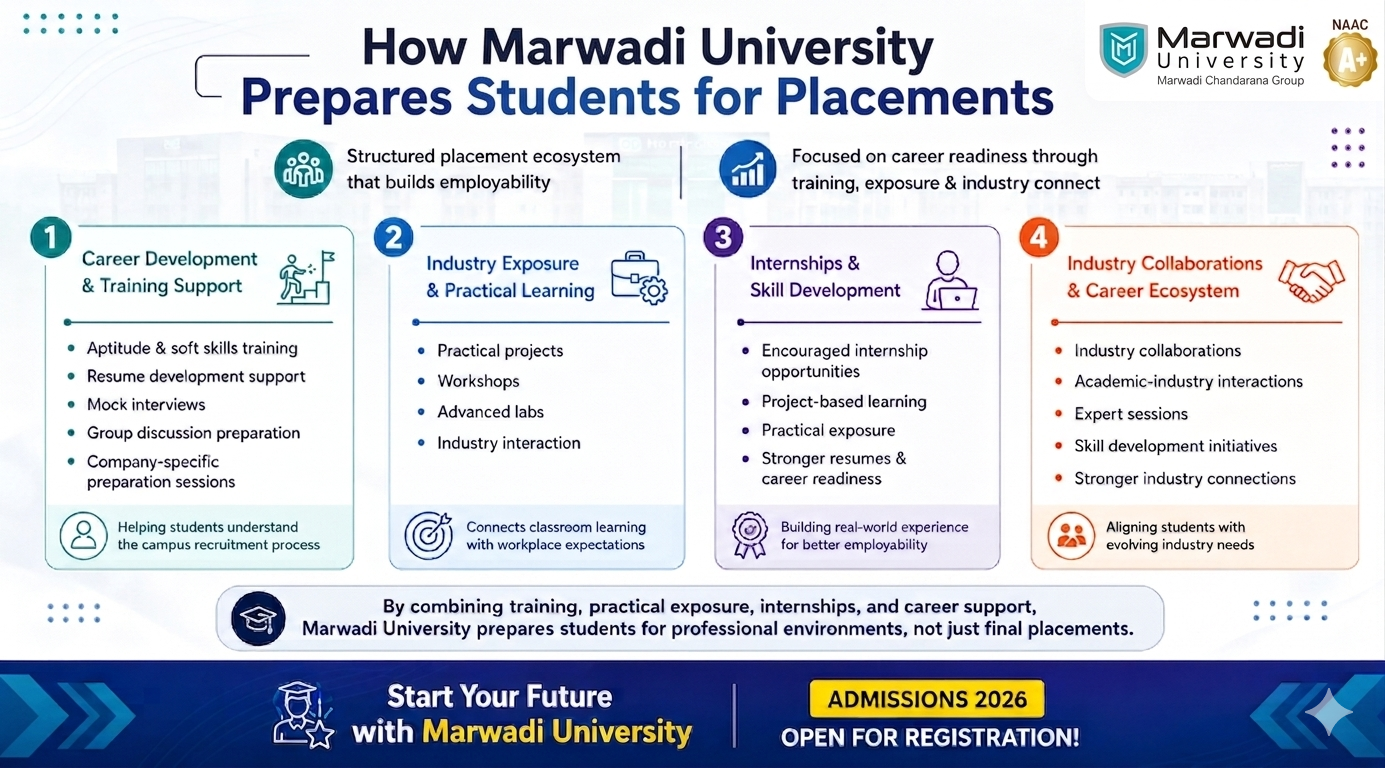
Marwadi University focuses on building employability through a structured placement ecosystem that combines academic learning with career readiness.
The university supports students through its placement and corporate engagement efforts aimed at improving placement preparation for students.
1. Career Development & Training Support
Marwadi University offers training initiatives designed to strengthen communication skills, aptitude, reasoning ability, technical readiness, and interview confidence.
Students receive exposure to:
- Aptitude and soft skills training
- Resume development support
- Mock interviews
- Group discussion preparation
- Company-specific preparation sessions
These activities help students understand the campus recruitment process before they enter placement season.
2. Industry Exposure & Practical Learning
Marwadi University emphasizes experiential learning through practical projects, workshops, labs, and industry interaction.
Industry exposure helps students connect classroom learning with workplace expectations, an important element in how placements work in engineering colleges and other professional programs.
3. Internships & Skill Development
Internships play a key role in employability. Students are encouraged to gain practical exposure through internship opportunities, project-based learning, and professional experiences that strengthen resumes and career readiness.
4. Industry Collaborations & Career Ecosystem
Marwadi University works toward industry engagement through collaborations, academic-industry interactions, expert sessions, and skill development initiatives.
Such efforts help create stronger placement opportunities in universities by connecting students with changing industry needs.
By combining training, practical exposure, internships, and career support, Marwadi University aims to prepare students for professional environments rather than only final-year recruitment drives.
Final Thoughts
Understanding university placements in India is important for every student before admission. Placements are not only about final-year job offers. They are about skill building, industry exposure, preparation, internships, and career readiness developed throughout the university journey.
Knowing how university placements work helps students make better academic decisions and set realistic expectations. Students should look beyond placement percentages and focus on training support, recruiter engagement, learning opportunities, and practical exposure.
The placement process in universities involves both institutional support and student effort. Universities can provide career guidance, industry interaction, and training but students must actively build skills, participate in learning opportunities, and prepare consistently.
When researching universities, ask informed questions, understand the campus recruitment process, and evaluate the ecosystem that supports employability.
Marwadi University’s focus on training initiatives, practical learning, internships, industry interaction, and career readiness reflects the growing importance of preparing students for modern workplaces.
Ultimately, success in university placements in India comes from the right combination of university support, student commitment, and continuous skill development.
FAQs
1. How do university placements work in India?
Universities connect companies with students through placement drives, assessments, interviews, and recruitment activities.
2. Are placements guaranteed after admission?
Yes but only with your skills, academic performance, preparation, industry demand, and recruiter requirements.
3. How important are internships for placements?
Internships improve practical exposure, strengthen resumes, and increase employability.
4. What skills matter most during campus placements?
Communication, technical knowledge, aptitude, problem solving, teamwork, and interview confidence are highly important.
5. What should students ask about placements before admission?
Ask about recruiter networks, training programs, internships, industry exposure, and the overall placement support system.