AI in Education: Transforming Teaching, Learning, and Student Placements
AI in education is changing the way students learn, teachers teach, and universities prepare learners for careers. From smart classrooms to personalized learning apps, artificial intelligence is becoming a powerful part of the education system. It is no longer just a future idea; it is already being used in schools and universities around the world.
Today, education is not limited to textbooks and traditional lectures. With the help of AI-powered systems, students can learn at their own speed, get instant feedback, and understand complex topics more easily. Teachers also get support in creating better lesson plans and tracking student performance. This improves overall learning quality and engagement.
Another important area where AI is making a difference is placements. Colleges are now using AI-based tools to guide students in career choices, improve interview preparation, and match them with suitable job roles. This makes the placement process faster, smarter, and more effective.
In this blog, we will explore how AI is transforming education through smart teaching methods, better learning outcomes, and improved placement support. We will also understand its benefits, challenges, and future possibilities in higher education.
Role of AI in Higher Education
The role of AI in higher education is growing rapidly as universities adopt smart systems for teaching, learning, and administration. AI is helping institutions become more data-driven, efficient, and student-focused.
How AI is transforming higher education:
- Analyzes student performance in real time
- Improves teaching quality using data insights
- Supports decision-making for educators and administrators
AI tools used in universities:
- AI-powered teaching tools like chatbots
- Smart content platforms for learning support
- Automated grading systems for faster evaluation
Key impact:
- Reduces teachers’ manual workload
- Improves student-teacher interaction time
- Identifies students who need extra support early
- Helps reduce dropout rates through timely intervention
Overall, AI is making higher education smarter, more efficient, and more personalized for students and teachers alike.
AI-Powered Teaching and Smart Classrooms
Modern classrooms are evolving with artificial intelligence in classrooms, making learning more interactive, flexible, and engaging for students.
Smart classroom technologies include:
- Digital smart boards
- Voice assistants and AI tutors
- Adaptive learning platforms
How AI supports teaching:
- Helps teachers customize lessons based on student performance
- Adjusts difficulty level of content automatically
- Provides real-time insights into student understanding
Benefits in classrooms:
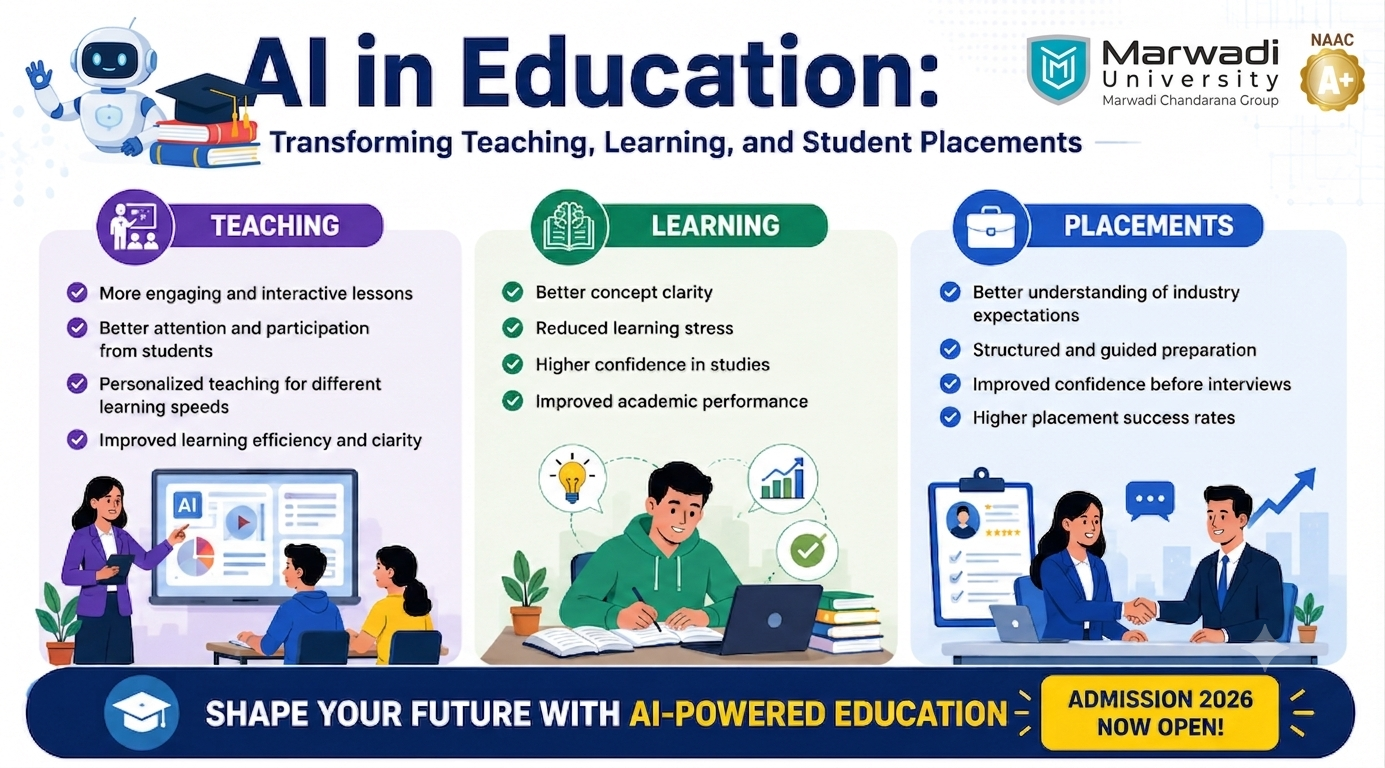
- More engaging and interactive lessons
- Better attention and participation from students
- Personalized teaching for different learning speeds
- Improved learning efficiency and clarity
AI-powered teaching is turning traditional classrooms into dynamic learning environments where students actively participate instead of just listening.
AI-Based Personalized Learning
AI-based personalized learning is one of the most powerful changes in modern education. It ensures that every student learns in a way that suits them best.
How personalized learning works:
- AI studies student learning behavior
- Creates customized study plans
- Suggests practice questions based on weaknesses
Key features:
- Adaptive learning paths for each student
- Instant feedback on performance
- Extra support for difficult topics
- Flexible learning speed based on understanding
Benefits for students:
- Better concept clarity
- Reduced learning stress
- Higher confidence in studies
- Improved academic performance
Personalized learning ensures that no student is left behind and every learner gets equal opportunity to succeed.
AI in Placement Preparation
AI in placement preparation is helping students become more job-ready through smart tools and real-time feedback systems.
AI tools used in placements:
- AI-based mock interviews
- Resume analysis tools
- Aptitude practice platforms
How it helps students:
- Simulates real interview environments
- Gives feedback on communication skills
- Improves technical and logical thinking
- Suggests resume improvements for better selection chances
Key benefits:
- Better understanding of industry expectations
- Structured and guided preparation
- Improved confidence before interviews
- Higher placement success rates
AI is making placement preparation more practical, data-driven, and effective for students.
Benefits of AI in Education
AI in education benefits students, teachers, and institutions by improving learning quality and efficiency.
Major benefits:
- Personalized learning experiences
- Faster and accurate assessments
- Better student engagement
- Smarter placement and career support
- Reduced workload for teachers
Impact on students:
- Better understanding of concepts
- Flexible learning pace
- Higher motivation and engagement
Impact on teachers:
- Less manual work
- More focus on teaching and mentoring
- Better classroom management
AI is making education more modern, efficient, and result-oriented for everyone involved.
Future of AI in Education
The future of AI in education is highly promising as technology continues to evolve and transform learning systems.
Future developments:
- AI-powered virtual tutors available 24/7
- Real-time learning feedback systems
- Fully personalized education models
Expected changes:
- More flexible and accessible learning
- Smarter classrooms with automation
- Better alignment with industry needs
Long-term impact:
- Stronger connection between education and jobs
- Improved student employability
- More skill-based learning systems
AI will not replace teachers but will support them in delivering smarter, faster, and more effective education.
Final Thoughts
AI in education is no longer optional; it is becoming essential for modern learning systems. From teaching to placements, AI is improving how education works at every level. It helps students learn better, teachers teach smarter, and institutions operate more efficiently.
With tools like AI-powered teaching tools and AI-based personalized learning, education is becoming more student-friendly and result-oriented. It is also making placement preparation easier through smart simulations and career guidance systems.
The role of AI in higher education will continue to grow as technology evolves. Universities that adopt AI early will give their students a strong competitive advantage in the job market.
In the coming years, AI will not replace teachers, but it will support them in delivering better education. Students who understand and use AI tools effectively will have better AI for student learning outcomes and stronger career opportunities.
The future of AI in education is about smarter learning, better skills, and stronger placements for everyone. Explore future-ready programs and secure your admission 2026 to build the skills needed for tomorrow’s careers.
FAQs
Q1. What is AI in education?
AI in education means using artificial intelligence tools to improve teaching, learning, and student support.
Q2. How does AI help students?
It helps students with personalized learning, better understanding, and smart study recommendations.
Q3. What are AI-powered teaching tools?
These are digital tools like smart tutors, chatbots, and grading systems that assist teachers.
Q4. How is AI used in placements?
AI is used for mock interviews, resume checking, and career guidance for students.
Q5. Will AI replace teachers in the future?
No, AI will support teachers, not replace them. It will make teaching more effective.