BTech Electrical Engineering in 2026: Career Scope, Salary, Jobs, & Future Trends
Choosing the engineering branch after Class 12 can feel overwhelming, especially when technology is changing so quickly. If you enjoy mathematics, physics, technology, and solving real-world problems, BTech Electrical Engineering can be a choice in 2026. The field is no longer limited to conventional power plants and electrical equipment. Today, electrical engineers contribute to electric vehicles, renewable energy, automation, smart grids, industrial systems, power electronics, and energy storage.
The BTech Electrical Engineering in 2026 offers a broad foundation that can lead to technical, industrial, research, and public-sector careers. India’s growing electricity demand and clean-energy transition are also creating opportunities across power generation, transmission, distribution, manufacturing, mobility, and infrastructure. Recent industry developments show increasing investment in grid expansion and renewable-energy transmission, while rising demand is being linked to EVs, data centres, and AI infrastructure.
This blog explains the BTech Electrical Engineering scope, career opportunities, salary trends, skills, higher-study options, and emerging areas you can explore. If you are comparing engineering branches and wondering whether Electrical Engineering has a strong future, this guide will help you make an informed decision. You will see how the combination of technical knowledge, practical exposure, software skills, and communication can improve your career readiness after graduation.
What Is BTech Electrical Engineering?
BTech Electrical Engineering is a four-year undergraduate engineering programme focused on electricity, electrical systems, energy conversion, machines, electronics, control, and power systems. It combines mathematical concepts and scientific principles with practical engineering applications.
Students learn how electrical power is generated, transmitted, controlled, converted, and used safely and efficiently. The course can also introduce students to modern areas such as renewable energy, electric mobility, automation, power electronics, smart grids, and industrial control.
Typical areas of study include:
- Engineering mathematics and physics
- Electrical circuits and network analysis
- Electrical machines and power systems
- Power electronics and drives
- Control systems and instrumentation
- Renewable energy and energy management
- Electrical measurements and protection
- Microprocessors, programming, and automation
The degree is useful because electricity is essential across almost every industry. Manufacturing plants, transportation systems, renewable-energy projects, buildings, utilities, and infrastructure all need professionals who understand electrical systems.
For students, this means the BTech Electrical Engineering scope is wider than a single profile. You can build a career in core electrical engineering, automation, energy, mobility, manufacturing, design, testing, maintenance, or research. The field also gives you a foundation for postgraduate study and specialised roles.
What Skills Will You Learn in BTech Electrical Engineering?
A BTech programme develops both technical knowledge and practical problem-solving ability. You learn to understand electrical systems, analyse faults, design solutions, and work with engineering tools.
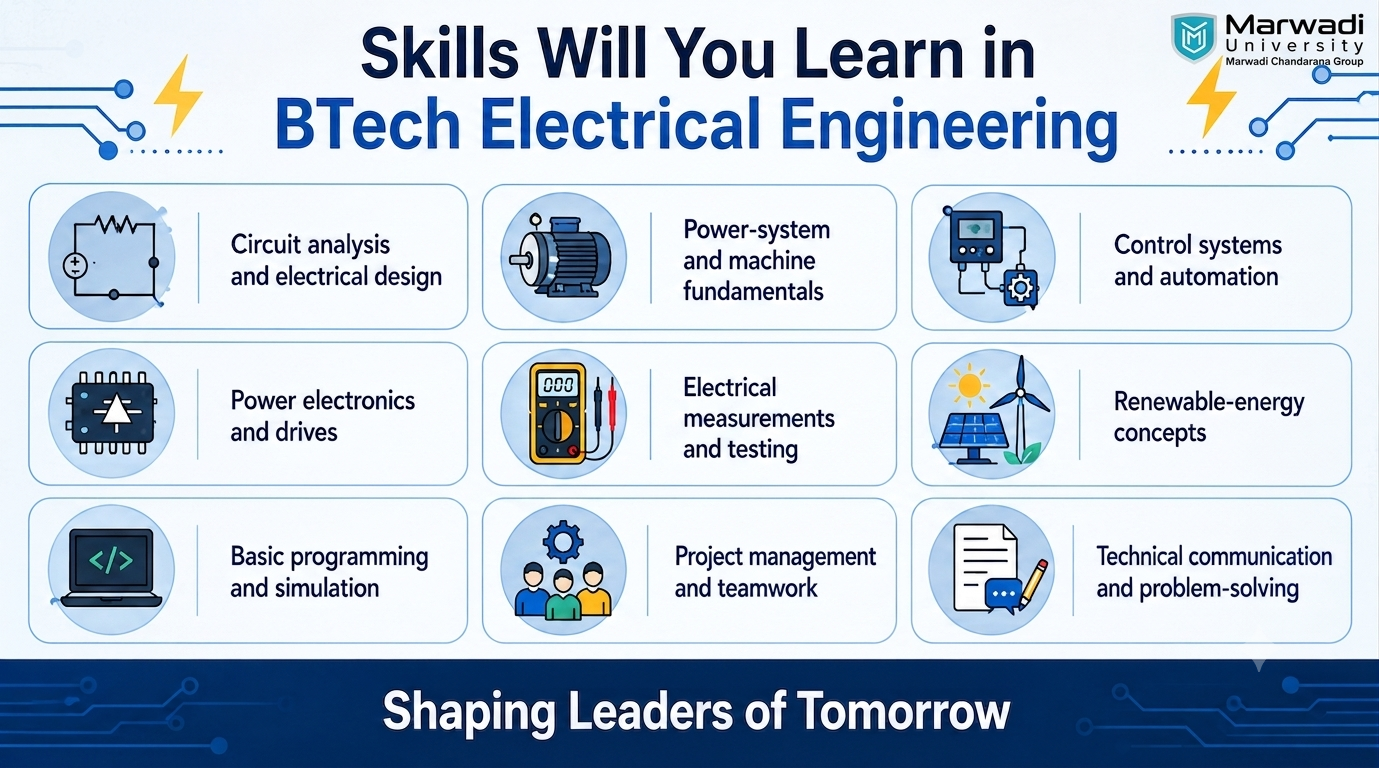
Key skills include:
- Circuit analysis and electrical design
- Power-system and machine fundamentals
- Control systems and automation
- Power electronics and drives
- Electrical measurements and testing
- Renewable-energy concepts
- Basic programming and simulation
- Project management and teamwork
- Technical communication and problem-solving
These skills can help graduates adapt to changing technologies and work across different engineering environments and industries.
What Is the Career Scope after BTech Electrical Engineering?
The BTech Electrical Engineering career path is broad because electrical systems are needed in energy, manufacturing, infrastructure, mobility, construction, automation, and other sectors. Graduates can begin with roles and later move into specialist, project, management, or research positions.
Job roles:
- Electrical Engineer
- Electrical Design Engineer
- Power Systems Engineer
- Control Systems Engineer
- Automation Engineer
- Maintenance Engineer
- Power Electronics Engineer
- Renewable Energy Engineer
- Project Engineer
- Testing and Commissioning Engineer
Hiring industries:
Companies may hire graduates for design, operations, maintenance, testing, execution, and support in these industries.
- Power generation and distribution
- Renewable energy
- Electrical equipment manufacturing
- Automotive and EVs
- Industrial automation
- Infrastructure
- Construction
- Railways
- Oil and gas
The BTech Electrical Engineering jobs market also extends into public-sector and government opportunities through relevant examinations and recruitment processes. Graduates interested in research or specialisation can pursue MTech, MS, MBA, or related postgraduate programmes. They can explore certifications in areas such as solar energy, EV technology, industrial automation, PLC/SCADA, and power systems.
With experience and upskilling, graduates can move toward leadership, consulting, research, or specialised roles.
What Are the Salary Trends for BTech Electrical Engineering?
The BTech Electrical Engineering salary depends on experience, job role, industry, location, skills, and employer.
- Freshers: ₹4-8 LPA
- Early-career engineers: ₹8-16 LPA
- Mid-level engineers: ₹16-25 LPA
- Senior engineers: ₹25-35 LPA
- Experienced specialists/leaders: ₹35-55+ LPA
Factors that can improve earning potential include experience, power electronics, automation, renewable energy, EV technology, control systems, design software, and project-management skills.
Why Choose Marwadi University for BTech Electrical Engineering?
Choosing a university for engineering is about more than completing a degree. Students should look for strong academics, practical learning, industry exposure, research opportunities, and career guidance.
Marwadi University offers BTech Electrical Engineering as a four-year programme through its engineering faculty. The university promotes hands-on education, research, innovation, and projects.
Students can apply classroom concepts through labs, projects, workshops, clubs, and industry interaction. The university also highlights career-development programmes covering skill enhancement, technology training, mentorship, and communication skills.
- Marwadi University is NAAC A+ accredited and has NBA Tier-1 programs.
- It has been awarded Centre of Excellence status by the Government of Gujarat, placing it among the top seven institutions in the state.
- The university holds a 353 QS Asia rank and a Top 200-300 NIRF rank.
- Its engineering ecosystem includes research, innovation, incubation, technical clubs, and project-based learning.
- The Faculty of Engineering focuses on preparing students for changing industry needs.
For Electrical Engineering students, these opportunities can help connect theory with real engineering applications. Projects, internships, and skill development can strengthen career readiness.
If you are planning BTech Electrical Engineering in 2026, Marwadi University offers an environment combining engineering fundamentals with practical learning, innovation, research, and development.
Final Thoughts
The BTech Electrical Engineering remains a relevant engineering choice in 2026 because electricity, energy systems, automation, mobility, and infrastructure continue to evolve.
The Electrical Engineering future scope is expanding into renewable energy, EVs, smart grids, power electronics, automation, and energy storage.
The future of Electrical Engineering in India is shaped by rising power demand and clean-energy investments.
Your success will depend not only on your degree but also on experience, skills, projects, internships, communication, and upskilling.
If you enjoy problem-solving and want a career connected to technology and infrastructure, Electrical Engineering can offer a flexible career path.
FAQs
1. Is BTech Electrical Engineering a good career in 2026?
Yes. Electrical Engineering offers career opportunities across power, renewable energy, EVs, automation, manufacturing, infrastructure, and emerging energy technologies.
2. What is the scope of BTech Electrical Engineering?
The BTech Electrical Engineering scope includes careers in power systems, automation, renewable energy, EVs, manufacturing, electrical design, control systems, and research.
3. What is the salary after BTech Electrical Engineering?
The BTech Electrical Engineering salary varies by role and experience. Current salary data places Electrical Engineer salaries in India at approximately ₹1.8–₹8.5 LPA across experience levels.
4. What are the best jobs after BTech Electrical Engineering?
Popular jobs after BTech Electrical Engineering include Electrical Engineer, Power Systems Engineer, Automation Engineer, Control Systems Engineer, Renewable Energy Engineer, and Power Electronics Engineer.
5. What is the future of Electrical Engineering in India?
The future of Electrical Engineering in India is closely connected to renewable energy, EVs, smart grids, energy storage, automation, and rising electricity demand.